
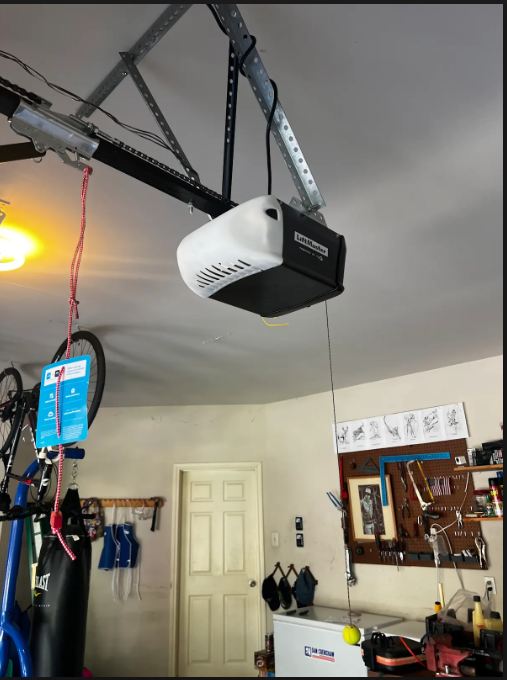
The garage door opener is what makes a heavy door convenient — until it stops cooperating. When an opener doesn't respond, runs but the door doesn't move, or behaves inconsistently, the cause can live in the opener itself, the door's hardware, or the controls. This guide walks through the opener problems we hear about most from homeowners in Pasadena, Texas, the safe checks you can try yourself, and when professional service makes sense.
The opener doesn't respond at all
If pressing the wall button or remote does nothing — no sound, no light, no movement — the opener may not be receiving power, or the opener's circuit board may have failed. Start with the basics: confirm the opener is plugged in and that the outlet has power, and check whether a breaker or GFCI has tripped. If the opener has power but still doesn't respond, the issue is likely internal and needs a professional assessment.
The door starts moving but stops
An opener that starts the door and then stops partway can point to a few causes. The travel or force limits may need adjusting, a roller or track may be binding, or a spring may be worn so the opener is working harder than it should. If the door feels heavy or jerky, the springs — not the opener — may be the real issue.
Stopping mid-travel can also be a safety response. If the opener senses resistance, it reverses to avoid damage or injury. That's why it's important not to force a door that's binding; the opener may be doing its job.
Remote or wall-control issues
When the wall button works but the remote doesn't — or the remote only works from very close — the remote battery, the remote itself, or the opener's receiver may be involved. A few safe checks:
- Replace the remote battery and try again.
- Reprogram the remote following the opener manufacturer's instructions.
- Check whether a second remote works; if it does, the first remote is likely the issue.
- Make sure nothing is blocking or interfering with the opener's antenna.
If the wall button doesn't work but the remote does, the wall button or its wiring may be the cause. These are safe to observe but the repair itself is best left to a professional.
Inconsistent operation
An opener that works sometimes and not others can be frustrating to diagnose. Intermittent issues can come from a weak remote signal, a sensor that's borderline misaligned, or a component inside the opener that's beginning to fail. Because intermittent problems are hard to reproduce, a professional assessment is often the most reliable way to find the cause.
Unusual noises from the opener
Grinding, humming, clicking, or clunking from the opener unit can signal a worn drive gear, a failing motor, or a belt or chain that needs attention. A opener that's gotten louder over time is worth having looked at before a part fails completely — a worn drive gear is a common and repairable cause when the motor runs but the door doesn't move.
Sensor and obstruction issues
If the door won't close, or reverses before closing, the safety sensors are a frequent cause. These sensors prevent the door from closing on something in its path. Safe checks you can do yourself:
- Make sure nothing is sitting in the door's path or between the sensors.
- Check that the two sensors face each other and haven't been bumped out of alignment.
- Gently clean the sensor lenses of dust or cobwebs.
Never bypass, disable, or tape over the safety sensors. They exist to prevent the door from closing on a person, pet, or object. If cleaning and alignment don't resolve the issue, contact a professional rather than working around the safety system.
When to call a professional
It's worth trying the safe, simple checks above — batteries, sensor path, and outlet power. But if those don't resolve the problem, or if the opener is making unusual noises, running but not moving, or behaving inconsistently, professional service is the right next step. Don't attempt to open the opener housing, modify wiring, or adjust internal components yourself.
We handle opener repair and installation for Pasadena-area homes. See our garage door opener repair and installation page for more.
garage door opener repair and installation
Because opener problems can also stem from the door itself — worn springs, binding rollers, a bent track — a full assessment often looks at both the opener and the door. Our garage door repair and installation page covers the door-side causes.
garage door repair and installation
What to include in your estimate request
When you request service, a few details help a technician come prepared:
- Whether the opener makes any sound or light when activated.
- Whether the wall button, remote, or both are affected.
- When the problem started and how often it happens.
- Any noises the opener makes.
- Whether the door moves at all, and how far.
We serve Pasadena and the surrounding communities from our Pasadena location — see our Pasadena service area page.
garage door repair in Pasadena
If your opener isn't working reliably, request an estimate through our form, or call Royal Garage Door Repair at (346) 873-2381. We're open 24/7.